
BLANCO / LOWER SALINAS VALLEY, Monterey County — October 30, 2026. An unusual water-quality experiment beside the Blanco Drain offers a more concrete way to understand how farmers and conservation groups are trying to reduce nitrate pollution before runoff reaches the Salinas River and Monterey Bay. Engineering firm FlowWest, which says it worked with the Resource Conservation District (RCD) of Monterey County, reports that a woodchip-based vertical-flow bioreactor installed in 2022 reduced nitrate in sampled inflow from 49 milligrams per liter to 0.5 milligrams per liter during a summer 2022 study—an approximately 99% reduction for that reported test.
These are project-partner reported trial results from 2022. They are not an independent, current October 2026 measurement of the entire Blanco Drain, not proof that every nearby farm has identical runoff, and not evidence that Monterey Bay has been cleared of nutrient pollution.
What is the Blanco Drain?
The drain is an engineered waterway collecting excess runoff from agricultural lands in the lower Salinas Valley. Monterey One Water explains that both the Blanco Drain and the Reclamation Ditch carry water from farm fields and other sources. Depending on diversion operations and water demand, some water may be directed to the regional treatment plant for recycling, while undiverted flow can continue toward the Salinas River and the bay.
The California State Clearinghouse’s 2018 environmental filing describes a proposal to install two woodchip denitrification bioreactor sites adjacent to the drain, processing a limited portion—about 10% of drain flow in the project description—and returning treated water downstream. That figure is the environmental filing’s design description, not evidence that 10% of all 2026 flow is being treated continuously.
How the bioreactor works
Woodchips supply carbon for microorganisms that, under suitable conditions, transform nitrate into nitrogen gas. FlowWest describes a vertical-flow design intended to reduce the problem of water bypassing reactive material before sufficient treatment can occur. The project is an example of nature-based denitrification, distinct from treating drinking water at a municipal plant or building a new sewer.
In its project account, FlowWest says test measurements in the summer of 2022 showed nitrate dropping from 49 mg/L to 0.5 mg/L. Those values describe the firm’s reported sampled inflow and outflow. They do not state the full mass of nitrogen removed across all seasons, annual maintenance costs, the performance of other treatment structures or compliance with all applicable receiving-water standards.
Why the result matters locally
Excess nitrate can affect waterway quality and contribute to undesirable algal growth downstream. The RCD’s water-quality program identifies agricultural runoff as a regional concern and describes work on treatment wetland and drainage projects near the lower Salinas River. A system that reliably removes nitrate at a specific site could become one component of a wider treatment strategy, particularly when growers can combine it with irrigation efficiency, nutrient management and on-farm best practices.
That does not mean the entire drain should be called a sewer, that nearby crops are unsafe or that every nitrate concentration reported in a controlled bioreactor equals a drinking-water concentration. These are different water uses and regulatory contexts. Farm drainage quality cannot be translated into a public-health finding about households without separate drinking-water testing and applicable thresholds.
The bioreactor and Pure Water Monterey are different systems
Monterey One Water separately describes capturing some Blanco Drain flow for its regional recycling and advanced purification operations. The utility’s Source Waters page explains the drain’s role in the broader source-water mix. The small local denitrifying bioreactor is not the same thing as the Pure Water Monterey advanced treatment plant or its injection wells, and the 99% pilot result must not be applied to those separate facilities.
Questions for 2026 follow-up
The next useful records are recent influent and effluent monitoring, maintenance records, annual seasonal performance, expansion plans and RCD updates. FlowWest’s published report does not confirm that identical performance continued uninterrupted through 2026. Residents and farmers can review RCD’s water-quality resources for current conservation assistance and ask what practices are available on their own properties.
Official and project sources: 2018 state environmental filing, Blanco Drain Water Quality Improvement Project; FlowWest’s reported summer 2022 bioreactor results; RCD Monterey County’s current water-quality program; Monterey One Water’s description of Blanco Drain runoff and diversion. Local environmental explainer published October 30, 2026; reported performance is historic and has not been independently replicated for the present day.
Submit independently documented updates to California58 Newsroom.
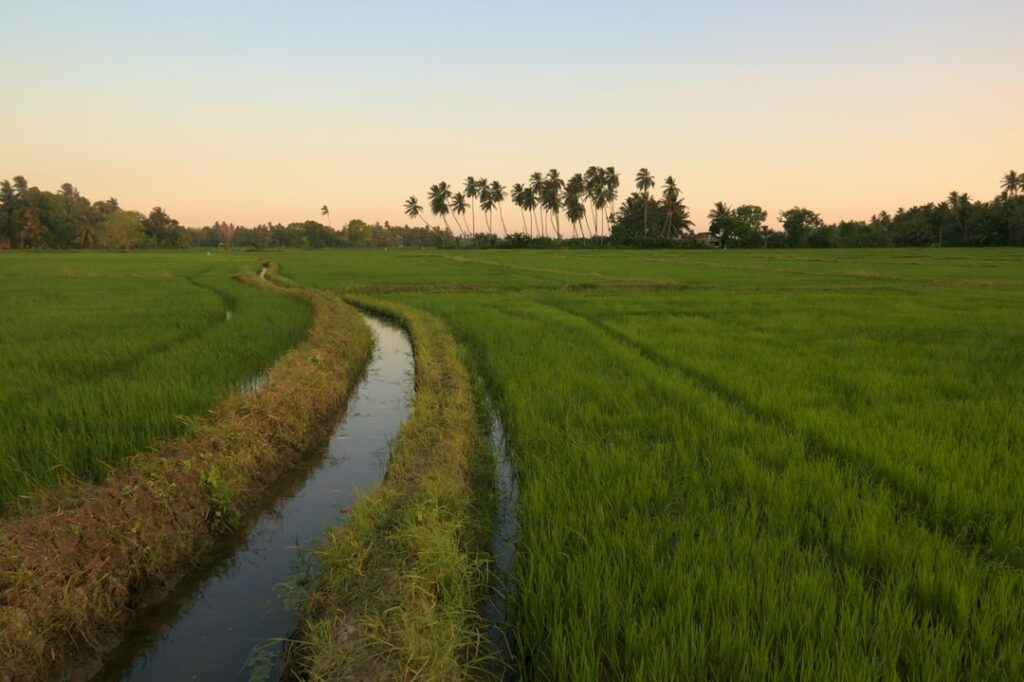
Featured photo: illustrative agricultural waterway by Benjamin le Roux / Unsplash. Not the Blanco Drain bioreactor, its 2022 test site, or a current water-quality measurement.
Support Blanco News
Choose how to support Blanco News:
Credit / Debit Card via StripeChoose your contribution amount on the secure California58 Stripe checkout. One-time support for independent local journalism.
Continue with PayPal Continue with ZelleZelle payments go to Vitaly Ataev Troshin. Please verify the recipient in your bank before sending. Availability depends on your bank.
Optional reader support. When possible, add “Blanco News” to the payment note. Contributions are not advertised as tax-deductible. Support does not influence editorial decisions.More from Blanco News
- Blanco Drain and Pure Water Monterey: How Agricultural Runoff Enters a System Now Supplying 60% of Peninsula Water →
- East Blanco Road Named in Salinas’ 2026 Pavement Program: City-Limits-to-Abbott Segment Listed →
- Blanco Road Roadwork Timeline: 2018 Overlay, $2.17 Million 2023 Resurfacing and 2024 Seal Coat →
- Blanco Road’s Role in the Marina–Salinas Transit Corridor: What Is Planned and What Is Not Funded Yet →
COMMUNITY
Comments
Join the California58 conversation. You must be signed in to comment.
Create a free California58 account or sign in with an available social provider.